Pranayama
A Guided Meditation
In Pranayama, Mark Griffin teaches how breath control leads to stillness, allowing the mind to stop and samadhi to arise through meditation. Unlike vigorous breathwork found in traditional hatha yoga classes, this meditation uses gentle yet profound techniques to deepen your meditative state and expand your awareness. After the guided portion of this teaching, enjoy 62 minutes of serene music to sustain an extended meditation session.
Duration: 1:17:30
You can become a member today to access this audio teaching from our growing archive, or purchase it from the Hard Light Center of Awakening bookstore.
IN THIS TEACHING
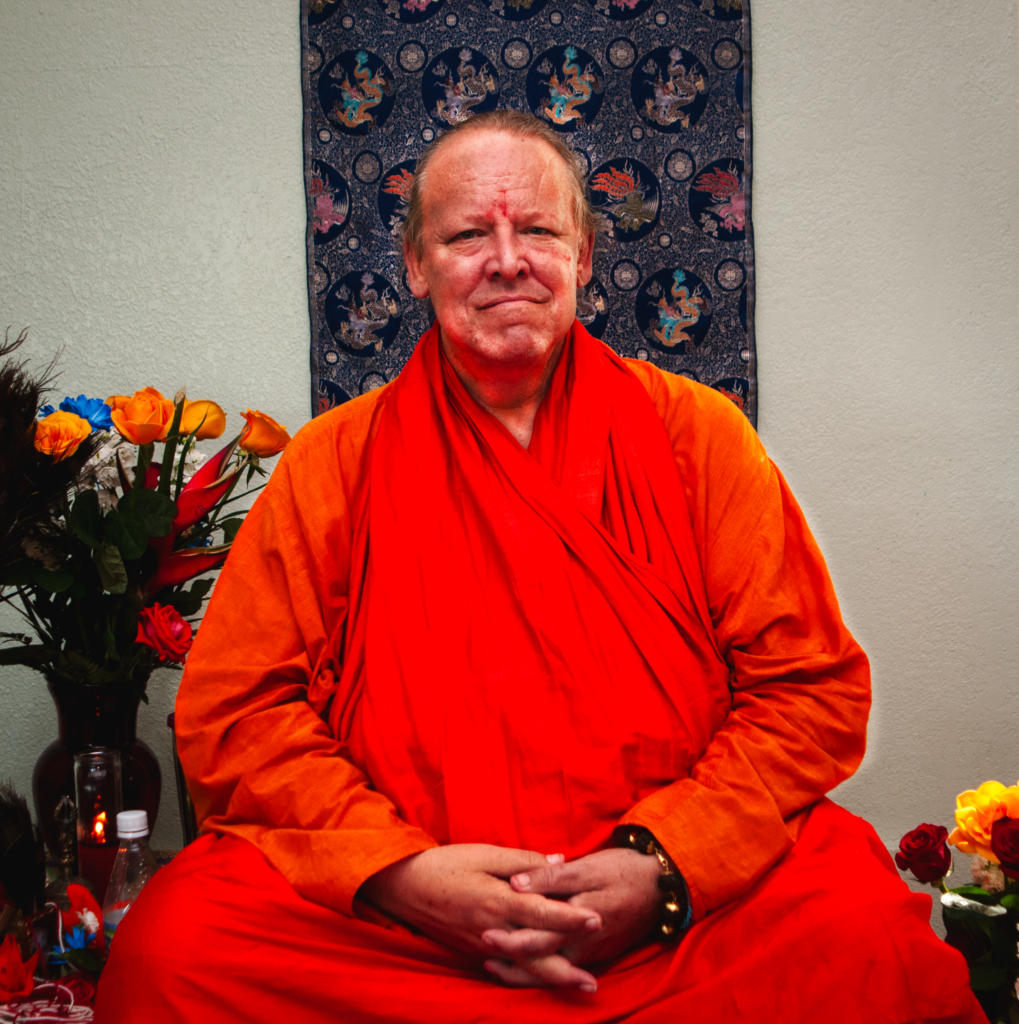
"The essence of Samadhi is the control of the breath, the control of the prana."
Meditation Master Mark Griffin
In Pranayama, Mark Griffin presents a foundational meditation practice centered on the control of breath as the direct gateway to stilling the mind and entering samadhi. The teaching emphasizes that mastery of the breath is inseparable from mastery of attention, revealing pranayama as a core mechanism of spiritual transformation.
Griffin begins by establishing the importance of posture, alignment, and the integration of the four bodies—physical, subtle energetic, mental, and supracausal—through conscious breathing. Using bellows breathing, the practitioner generates a strong flow of prana through the body, activating the spine and aligning awareness across multiple levels of being.
The teaching then introduces the critical practice of breath retention, including inward retention (kumbhaka) and outward retention (rechaka). These moments of cessation are presented as the key to deeper meditation. When the breath stops, the movement of prana pauses, and the mind naturally begins to quiet. This principle reflects the deeper mechanics explored in Distilled Pratyahara, where cessation of sensory and mental activity leads to profound stillness.
As pranayama deepens, the practitioner develops the capacity for heightened observation. Griffin describes how the cessation of breath amplifies awareness, allowing one to perceive the subtle architecture of the body, including the channels (ida, pingala, and sushumna), chakras, and the movement of prana throughout the system. This increased clarity supports the transition into higher states of meditation, including the fourth state of consciousness.
Ultimately, Pranayama is presented as a direct pathway to samadhi. By mastering the rhythm of breath and learning to stabilize attention in moments of cessation, the practitioner gains access to deeper levels of awareness, where the mind becomes still and consciousness reveals itself directly.

Member Access
To listen to the full audio and access the teaching materials, please log in or become a member.