The Natural State
An Overview of the Subtle States of Samadhi
The Natural State by Mark Griffin reveals the stabilized condition of awakening, where consciousness and everyday awareness exist in perfect equilibrium. Through the stages of samadhi and nondual realization, this teaching explores how awareness abides naturally as the ground of all experience.
Duration: 1:06:45 / 15 Pages
You can become a member today to access this audio teaching from our growing archive, or purchase it from the Hard Light Center of Awakening bookstore.
IN THIS TEACHING
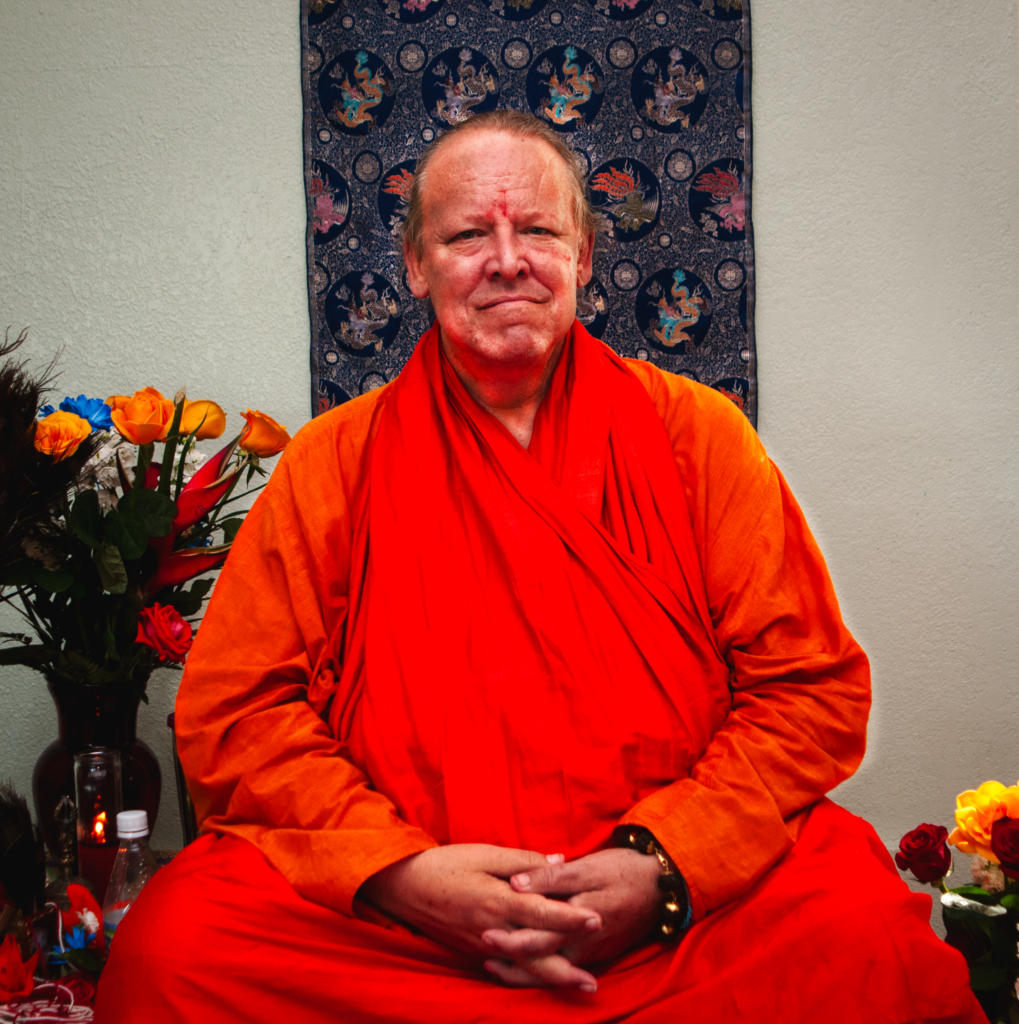
"It is important that during this session you make no effort whatsoever to generate any kind of meditation within your system. Simply recognize that all of the dynamics of being, from the physical body and the sensory fields, the subtle physical body, to the mind and its intellectual capacity of cognition, are in direct and total equilibrium with consciousness, and you simply arise in your awakened form."
Meditation Master Mark Griffin
In The Natural State, Mark Griffin presents a profound teaching on the stabilization of awakening, describing the natural state as the spontaneous equilibrium between individual awareness and the Ocean of Consciousness. Rather than something to be created or attained, the natural state is revealed as the inherent condition of being—uncovered when cognition, attention, and mind come into balance with pure consciousness beyond thought and conceptual activity.
Griffin outlines a progressive refinement of perception, drawing on the classical framework of samadhi. Beginning with the calming of mental activity and the emergence of inner luminosity (laya), the practitioner moves through stages of increasing absorption—savikalpa, asamprajnata, and ultimately Nirvikalpa Samadhi—where the distinction between subject and object dissolves entirely. These stages describe not the acquisition of new knowledge, but the progressive unveiling of consciousness as it is.
The culmination of this process is sahaj samadhi, the natural state itself. In this condition, awareness remains continuously unified with the Ocean of Consciousness while simultaneously functioning within the world. This integration reflects the same nondual realization described in The Recognition of Consciousness, but here it is stabilized as an ongoing mode of being rather than a momentary insight.
A key insight of the teaching is that the intellect, rather than being eliminated, is refined and brought into alignment with consciousness. As perception becomes increasingly subtle, the intellect transforms from a mechanism of fragmentation into a precise instrument of direct knowing. This refinement dissolves the habitual outward movement of attention into sensory experience, allowing awareness to rest in its own nature.
While the teaching references subtle structures such as the central channel and the crown center, these are presented as supportive frameworks rather than the primary focus. The essence of the teaching lies in the recognition that consciousness is already present, complete, and self-sustaining. The path is therefore one of equilibrium—removing imbalance rather than creating something new.
Ultimately, The Natural State describes the culmination of spiritual practice: a condition in which meditation becomes effortless, perception becomes unified, and life itself is lived from the ground of consciousness. In this state, nothing is added and nothing is removed—awareness simply abides as itself, fully integrated within both the absolute and relative dimensions of existence.

Member Access
To listen to the full audio and access the teaching materials, please log in or become a member.