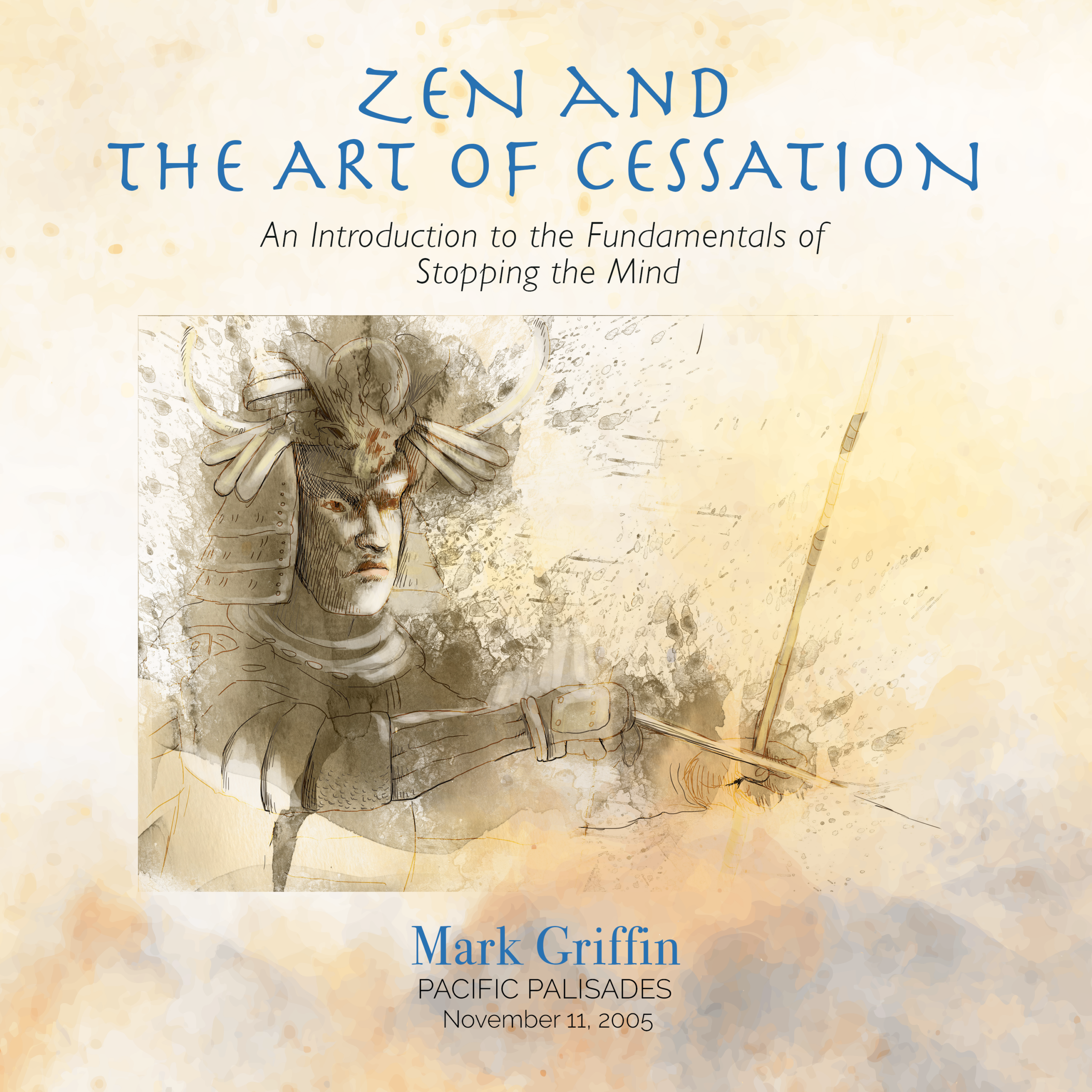
Zen & the Art of Cessation
An Introduction to the Fundamentals of Stopping the Mind
Zen & the Art of Cessation presents Mark Griffin’s stripped-down map of meditation as a living process of cessation, observation, and samadhi. Drawing on Yoga Tantra and the Zen principle of “no-mind,” the teaching shows how pratyahara, breath awareness, and subtle perception progressively still the senses and reveal the deeper strata of consciousness.
Duration: 2:02:17
You can become a member today to access this audio teaching from our growing archive, or purchase it from the Hard Light Center of Awakening bookstore.
IN THIS TEACHING
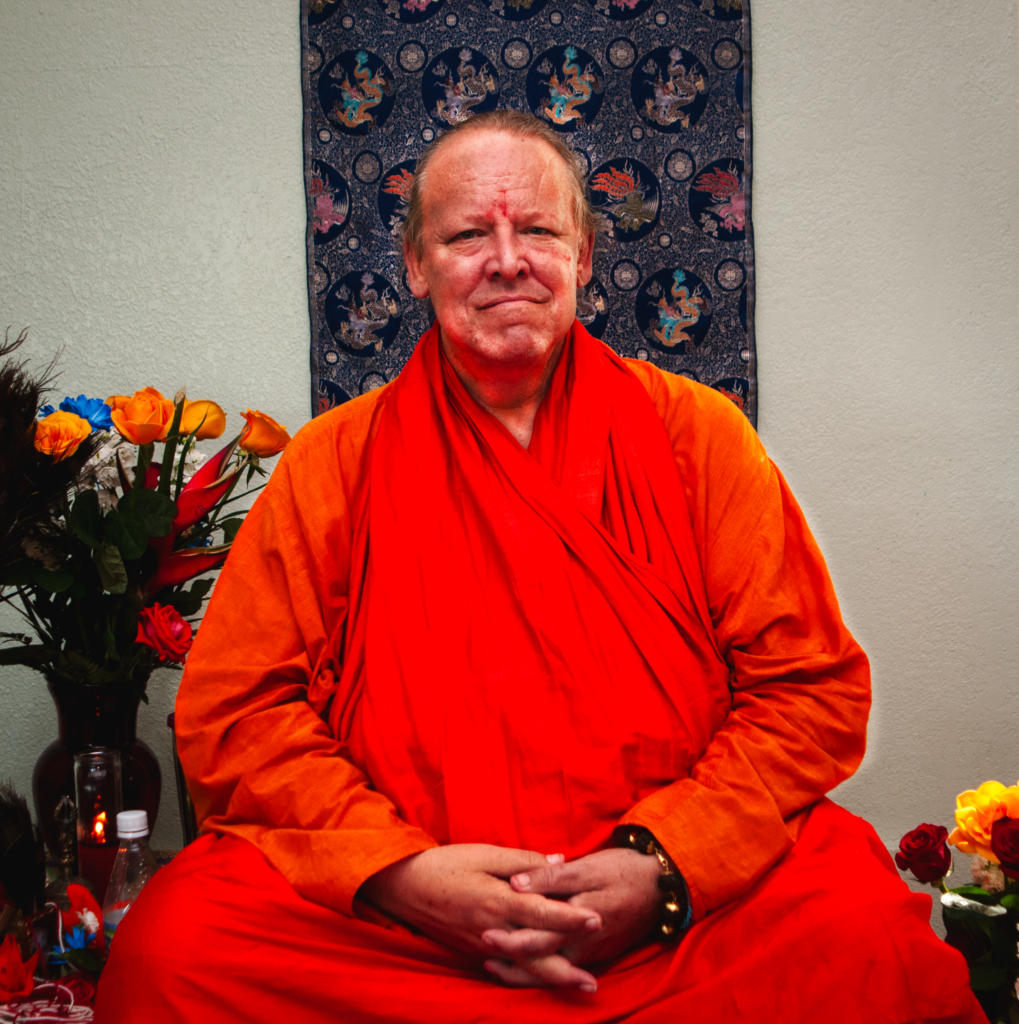
"This process of cessation moves from the gross to the subtle, to the more subtle, to the supremely subtle. The idea of cessation is an equation that arises in all spiritual systems, all philosophical systems. The elimination of one thing gives rise to the capacity of experience, or the perception of another thing, seemingly higher on the spectrum, higher in vibration, or closer to the truth."
Meditation Master Mark Griffin
In Zen & the Art of Cessation, Mark Griffin offers a penetrating exploration of meditation as a progressive sequence of cessation, observation, and samadhi—the three fundamental reflexes of awakened attention. Drawing from both Yoga Tantra and the experiential clarity of Zen, he presents spiritual practice as a systematic stripping away of conditioned perception, revealing increasingly subtle strata of consciousness.
The teaching begins with the premise that enlightenment is not an acquisition but a process of subtraction. Through the deliberate cessation of gross sensory engagement, energetic identification, and mental formation, the practitioner gains access to deeper modes of observation. This progression moves from the physical body to the subtle energetic body, from the causal mind to the atmic substratum of pure consciousness. Each level of cessation unveils a more refined field of awareness, culminating in the direct apprehension of the void-like nature of truth.
Central to this process is pratyahara—the withdrawal and “switching off” of the senses through the alignment of breath, prana, and attention. Griffin emphasizes that the key doorway into no-mind is the space between the breaths, where the oscillation of prana momentarily ceases and the mind naturally becomes still. By stabilizing awareness in this interval, practitioners begin to experience the dissolution of the egoic assembly and the emergence of luminous, unconditioned consciousness.
The teaching further clarifies the dynamics of samadhi as a deepening continuum rather than a single endpoint. Initial glimpses of truth occur through savikalpa samadhi, where subtle identity remains, but as cessation intensifies, the practitioner moves toward nirvikalpa samadhi—absorption into the monadic singularity of consciousness beyond conceptual thought. In this state, the architecture of perception itself is reconfigured, allowing awareness to operate independently of sensory conditioning and mental proliferation.
Ultimately, Zen & the Art of Cessation frames meditation as an elegant and universal science. Whether approached through Zen, Tantra, or other contemplative traditions, the essential mechanism remains the same: progressively cease conditioned perception, deepen observation, and allow samadhi to unfold as the natural recognition of consciousness by itself.

Member Access
To listen to the full audio and access the teaching materials, please log in or become a member.