The Witness
Exploring the Luminous Nature of the Mind
The Witness by Mark Griffin explores witness consciousness as the essential capacity of meditation, guiding practitioners through the four bodies toward one-pointedness, one taste, and the direct recognition of pure awareness.
Duration: 50:33 / 13 Pages
You can become a member today to access this audio teaching from our growing archive, or purchase it from the Hard Light Center of Awakening bookstore.
IN THIS TEACHING
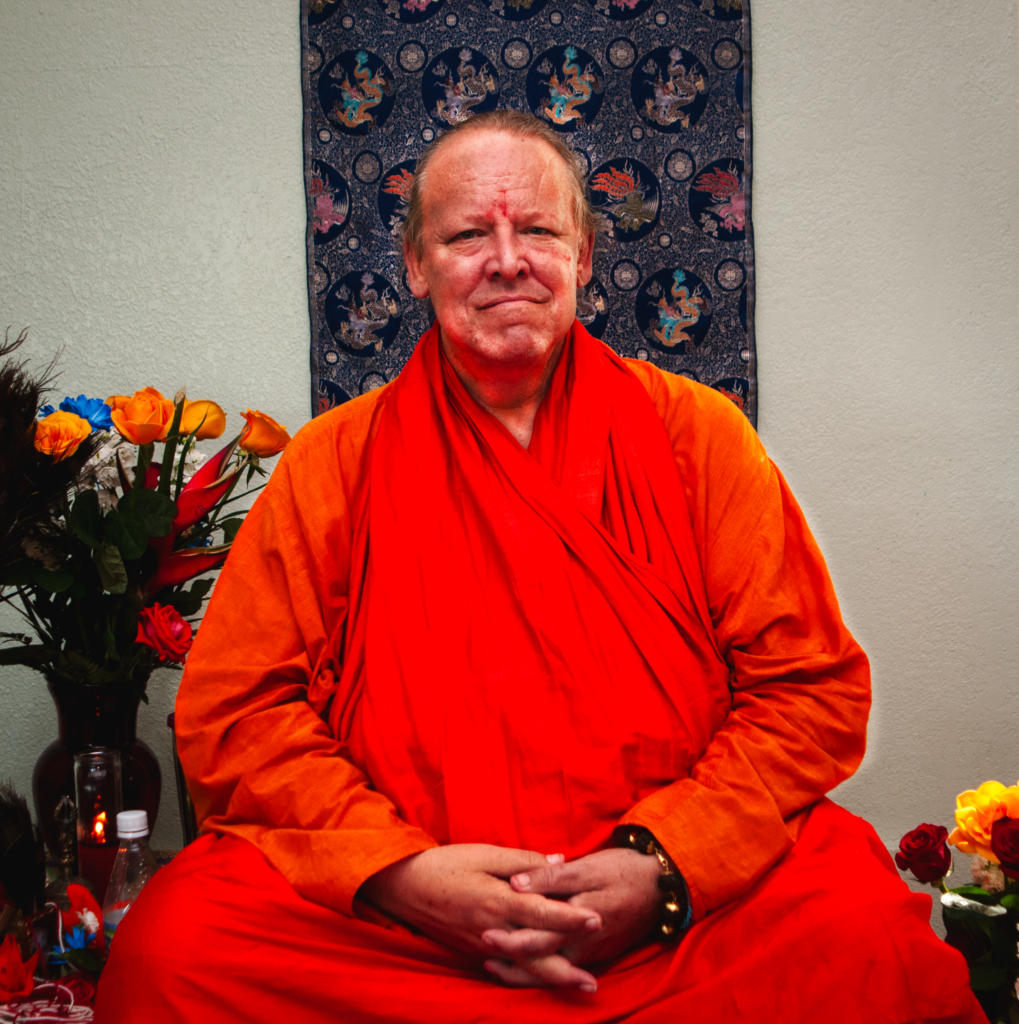
"Simply put The Witness is a form of consciousness wherein consciousness observes or perceives consciousness. It is what we would consider fundamental consciousness expressing itself through the formation of consciousness that we call the Mind. In the human form, the causal body is the body of mental formation. It is pure awareness."
Meditation Master Mark Griffin
In The Witness, Mark Griffin explores meditation as a progressive interior journey through the “sheaths” of the human being—physical (matter), subtle-physical (energy), causal (mind/mental formation), and supracausal (pure consciousness)—situating concentration and meditation as pivotal capacities of Awareness itself: witness consciousness.
He defines the witness simply and precisely: consciousness observing consciousness. It is the mind’s most neutral mode—an inner perceiver that records experience without prejudice, emotion, or the habitual filters of kleshas. In everyday life, perception is constantly conditioned by mood, fear, desire, memory, and bias; yet Griffin insists that beneath that conditioning, the witness has always been present, quietly recording everything—seen and unseen—across lifetimes.
Meditation, in this view, is not merely relaxation but a method of self-inquiry that “washes the mirror” of mind, strengthening the witness until it begins to re-condition the whole perceptual system. As this deepens, the witness expresses distinct tonalities:
-
One-pointedness: attention becomes laser-focused on a single object—breath, mantra, kundalini, deity, or an inner question—producing penetrating clarity, visionary perception, and sudden insight (the “eureka” of direct knowing).
-
One taste: after sustained practice, attention stops bouncing between the three worlds (physical/energy/mind) and stabilizes in the substratum of the fourth body. Phenomena still arise—sound, sensation, energy, thought—but they begin to share a single underlying flavor: pure consciousness.
This shift is presented as deeply liberating. When “one taste” dawns, the ordinary engine of bondage—the egoic “I” dividing reality into attraction and aversion—loses its fuel. As list-making and preference-making exhaust themselves, the mind slows, then stops; this cessation rolls through mind, energy, and even the body, opening the threshold of samadhi. Paradoxically, the witness remains: because consciousness is luminous by nature, there is never a true absence—only varying degrees of recognition.
Griffin emphasizes that “one taste” is not dull sameness; it is radical vividness—experience unmediated by conditioning, ever-new, sometimes revealing both creation and consciousness at once, and sometimes consciousness alone. The talk closes by returning the teaching to its core instruction: practice—sit again, deepen contact with the witness, and let the training continue.

Member Access
To listen to the full audio and access the teaching materials, please log in or become a member.