Kundalini Meditation Seated + Standing
Guided Meditation
Kundalini Meditation Seated + Standing is a guided kundalini meditation by Mark Griffin exploring the movement of life force through the spine, breath, and subtle bodies. This teaching emphasizes integration of body, prana, and consciousness, introducing practitioners to the experiential dynamics of awakening within the tantric contemplative tradition.
Duration: 2:37:53
You can become a member today to access this audio teaching from our growing archive, or purchase it from the Hard Light Center of Awakening bookstore.
IN THIS TEACHING
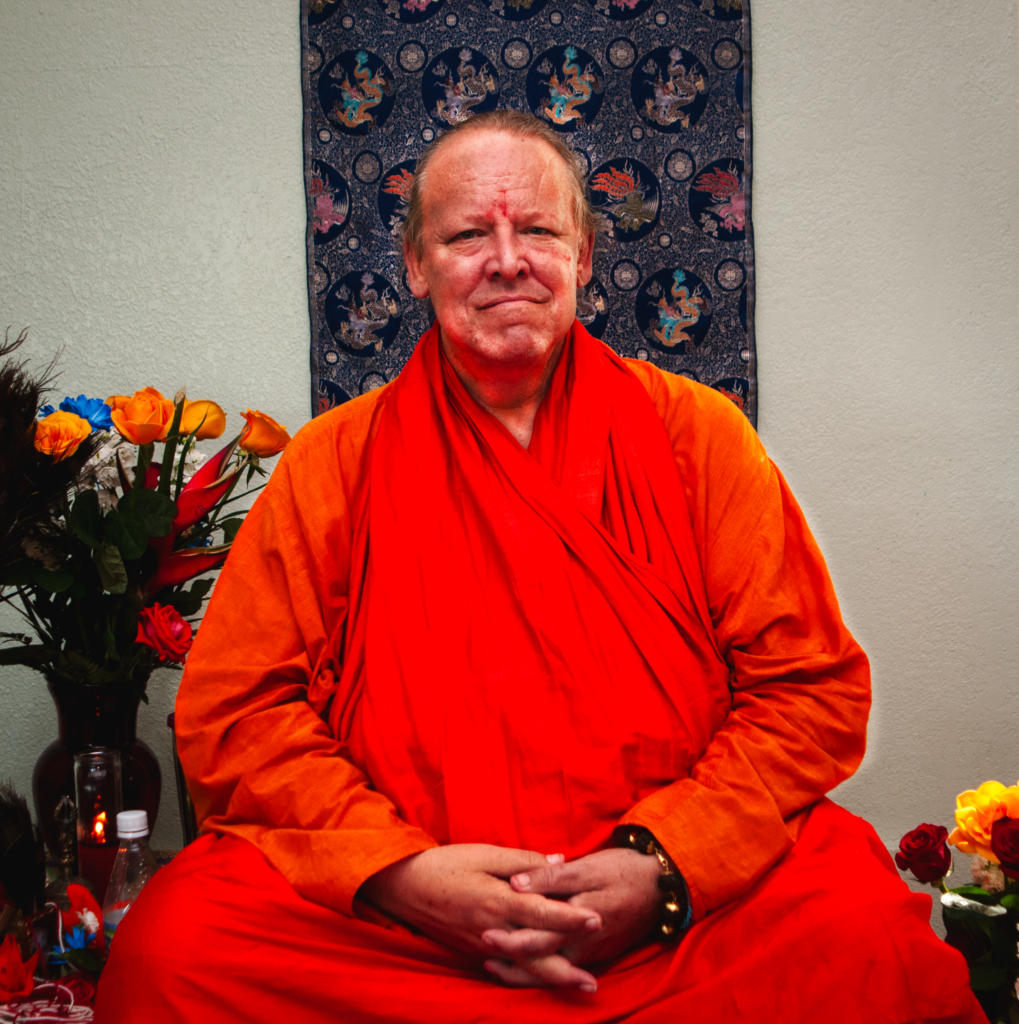
"I want to show you something about the interaction with the great creative that is the Mahakundalini, and the nature of your being– the structure of your human form. The Kundalini is the creation and it operates and thoroughly pervades the apparent and creative universe. The architecture of your own form reflects this structure."
Meditation Master Mark Griffin
Kundalini Meditation Seated + Standing – Guided Meditation is a deeply embodied exploration of the dynamic interaction between Mahakundalini—the universal creative force—and the architecture of the human form across the four bodies: physical, subtle energetic, causal (mind), and supracausal consciousness. In this teaching, Kundalini is presented not merely as an internal energetic phenomenon but as the primordial power of creation itself, pervading the cosmos and organizing experience according to the locus of awareness. As attention refines from dense bodily sensation into subtler dimensions of prana, mind, and pure consciousness, the practitioner progressively attunes to increasingly expansive fields of being, moving from personal identity into direct participation in universal consciousness.
The meditation situates the spine as a living axis linking heaven and earth, with the crown experienced as a vast descending reservoir of awareness and the base of the spine as the ascending surge of Shakti. Through sustained bellows breathing centered at the solar plexus, the practitioner stabilizes the physical form while activating the movement of prana along the central channel. Techniques such as kumbhaka (inner retention) and rechaka (outer retention) intensify the current of Kundalini, deepening sensitivity to the chakras, nadis, and the integration of breath, mind, and life force. Breath becomes the primary vehicle of realization, linking the individual organism to the atmospheric field and ultimately to the universal matrix of consciousness.
A key theme of this meditation is integration rather than transcendental escape. The body is not abandoned but understood as a vessel through which the descending and ascending currents of Kundalini—here associated with the white and red bodhicitta—interweave within the heart and subtle nervous system. As energetic sensitivity increases, practitioners may experience the spine opening, the heart saturating with subtle vibration, and the gradual dissolution of the sense of a separate self into a vast rhythmic continuum of pranic movement. Grounding through contact with the earth, stabilizing awareness in the heart, and cultivating endurance through breath are emphasized as essential supports for navigating powerful states of transformation.
Ultimately, Kundalini Seated + Standing guides the practitioner toward direct experiential recognition that the body exists within the life force, rather than containing it. Through sustained meditative engagement, the teaching points toward the natural emergence of the fourth state (turiya), where breath, stillness, and the space between breaths reveal the seamless unity of embodied awareness and universal consciousness.

Member Access
To listen to the full audio and access the teaching materials, please log in or become a member.