The Battle For Enlightenment
Shaping Our Life Through Intent
The Battle for Enlightenment by Mark Griffin reveals the spiritual path as a race against time—uniting Guru lineage, Shaktipat, and disciplined practice into a life of focused awakening.
Duration: 1:17:09
You can become a member today to access this audio teaching from our growing archive, or purchase it from the Hard Light Center of Awakening bookstore.
IN THIS TEACHING
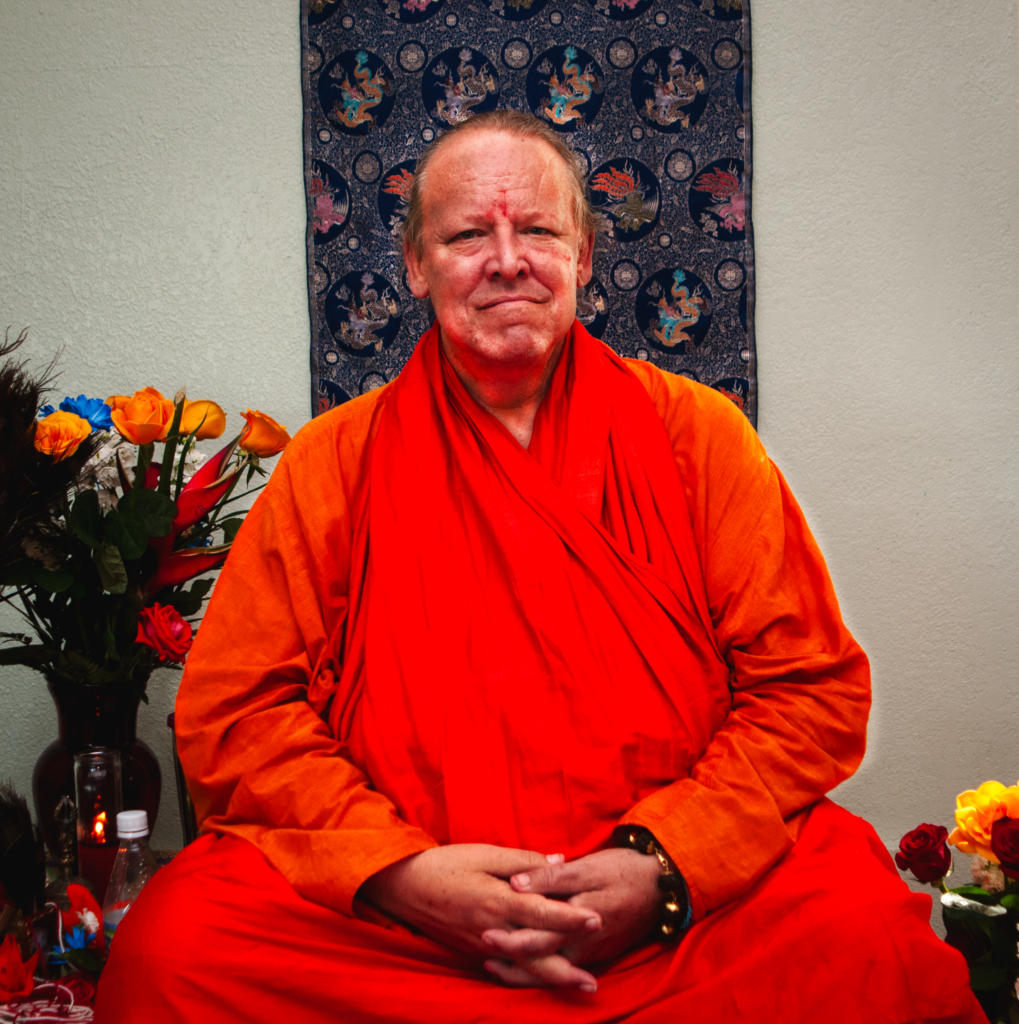
"The nature of the path is a little bit funny in that for all of its dynamics, one of the main components of successful navigation of the path is luck, good fortune. Your good fortune began when you gained access to this rare and difficult to achieve human form."
Meditation Master Mark Griffin
In The Battle for Enlightenment, Mark Griffin presents the spiritual path as both fierce acceleration and existential urgency—a battle waged within ordinary life, where each day becomes a field of choices, attention, endurance, and intent.
The teaching opens with a dual purpose: to generate Shaktipat, the wave of awakening, and to establish a foundation for sustained spiritual effort. Griffin introduces the idea of good fortune—human birth, spiritual community, and most importantly, contact with a Guru—not as random chance, but as the accumulated result of virtue, intention, and karmic continuity across lifetimes.
From this foundation, the tone sharpens: life is finite—“a rosary of breaths”—and the transitions of death, bardo, and rebirth are unstable enough to produce profound forgetfulness. Spiritual life therefore becomes a strategic endeavor: to awaken while conditions are favorable. The central mechanism for this transformation is intent, the seed of karma and the steering force of destiny. In a pivotal moment, the practitioner is asked to make a direct inner vow—to pursue enlightenment within the field of the Guru lineage.
Griffin then grounds this vow in lived practice. Spiritual life becomes real only through contact with Spirit—a continuous “churning” of daily existence with the presence of Guru, Dharma, and meditation. The company one keeps becomes decisive, as proximity to awakened beings transmits subtle knowledge and reorganizes perception from within.
A functional map of transformation follows:
belief → action → memory → concentration → meditation → samadhi
Most remain at belief; the Guru trains the student to cross into action, where energy becomes transformative. Meditation and samadhi are presented not as abstractions, but as methods for accessing pure, unconditioned energy, free from the distortions of memory, attraction, and aversion. From this clarity arises a practical ethic:
increase knowledge, decrease ignorance—give light, become light.
The teaching also defines the container of practice: a high-intensity sadhana model, where sustained effort, regular immersion, and disciplined responsiveness generate rapid transformation. This path is described as potent—even volatile—requiring precision, humility, and the ability to respond to guidance as energy increases.
At its core, The Battle for Enlightenment reframes the path as a living contract: awakening is not measured by belief, but by action—by how one organizes attention, practice, and life itself around the pursuit of realization.

Member Access
To listen to the full audio and access the teaching materials, please log in or become a member.