Sunyata: Recognizing Emptiness
"Form Is Emptiness; Emptiness is Form”
Sunyata: Recognizing Emptiness is a teaching in which Mark Griffin presents emptiness as the direct experiential ground of consciousness, revealing how the recognition of voidness across the four bodies dissolves conditioned perception and stabilizes awareness in the natural state of pure being.
Duration: 1:29:23 / 17 Pages
You can become a member today to access this audio teaching from our growing archive, or purchase it from the Hard Light Center of Awakening bookstore.
IN THIS TEACHING
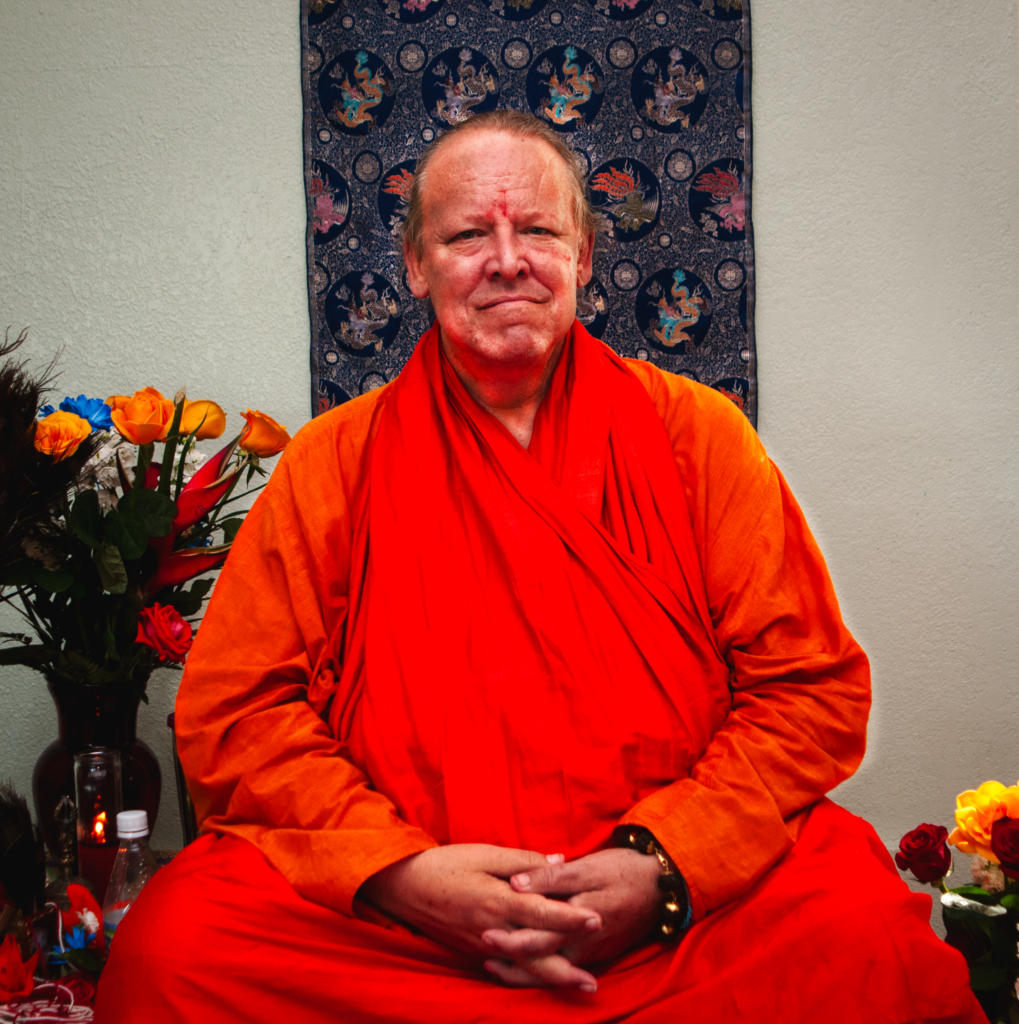
“Emptiness is not nothingness—it is the origin of all things. To work with emptiness is to access infinite potential.”
Meditation Master Mark Griffin
In Sunyata: Recognizing Emptiness, Mark Griffin presents emptiness not as an abstract philosophy, but as a direct experiential substratum of consciousness—so subtle that it cannot be conceived by the mind without instantly becoming a “form.” He defines sunyata as emptiness, void, or zero: the absolute absence of fixed quality, and the ground from which all phenomena arise.
The teaching pivots on the classical formula “form is emptiness, emptiness is form,” which he frames through the dynamics of subject and object, left brain and right brain, logic and intuition. Rather than dismiss intuition as irrational, he reframes it as “compressed logic,” an immediate strike to truth that bypasses discursive reasoning. In this way, insight becomes a higher faculty of cognition essential for apprehending emptiness.
Situated within yoga tantra and the Anuttara (highest) class of realization, sunyata is presented as the unification of form and emptiness across the four bodies—physical, subtle physical (energy), causal (mind), and supracausal (pure consciousness). As spiritual training progresses through concentration, discrimination, meditation, and contemplation, perception refines from basic cognition to ultracognition, where consciousness directly perceives itself without phenomenal overlay.
Griffin emphasizes that emptiness is veiled by the phantasmagoria of form. Through Shaktipat and kundalini awakening, the systems of consciousness are progressively “switched on,” purifying samskaric and karmic impressions and replacing obscuration with Bodhicitta (awakened mind). He vividly describes this purification as a process where the light of consciousness consumes afflictive impressions, leaving open spaces that are naturally filled by pure awareness.
A key experiential gateway to emptiness is the breath: the still point between in-breath and out-breath becomes the practitioner’s first direct encounter with voidness—where prana, mind, and form temporarily suspend. He further correlates emptiness with the three states of waking, dreaming, and deep sleep, and the fourth state—samadhi—where mind and breath cease and attention merges into the Ocean of Consciousness.
The intensive culminates in a distinctly Vajrayana approach: rather than a purely step-wise path of gradual refinement, one directly takes this time, this place, and whatever arises as sunyata. Every perception—sound, sight, thought, reaction—is recognized as empty in nature. This “thunderbolt” method cuts through attraction and aversion, dissolving kleisha-born reactions and stabilizing awareness in lucid emptiness.
Ultimately, Griffin reframes emptiness as liberative rather than nihilistic: phenomena appear, function, and are experienced, yet lack inherent, independent reality. By saturating attention in the recognition of emptiness in all conditions, the practitioner interrupts cyclic patterns of reaction and glimpses the spontaneous presence of Bodhicitta—pure consciousness expressing itself as both form and void. The intensive closes with the assertion that sustained recognition of present-moment emptiness plants the “seed of sunyata” in the continuum, transforming perception and accelerating awakening through direct contact with the Guru’s illuminating force.

Member Access
To listen to the full audio and access the teaching materials, please log in or become a member.