Pratyahara IV Meditation
A Guided Meditation
Pratyahara IV – Guided Meditation by Mark Griffin is an advanced meditation teaching on stopping the mind through breath retention, sensory withdrawal, and the merging of attention into the central channel.
Duration: 2:36:43
You can become a member today to access this audio teaching from our growing archive, or purchase it from the Hard Light Center of Awakening bookstore.
IN THIS TEACHING
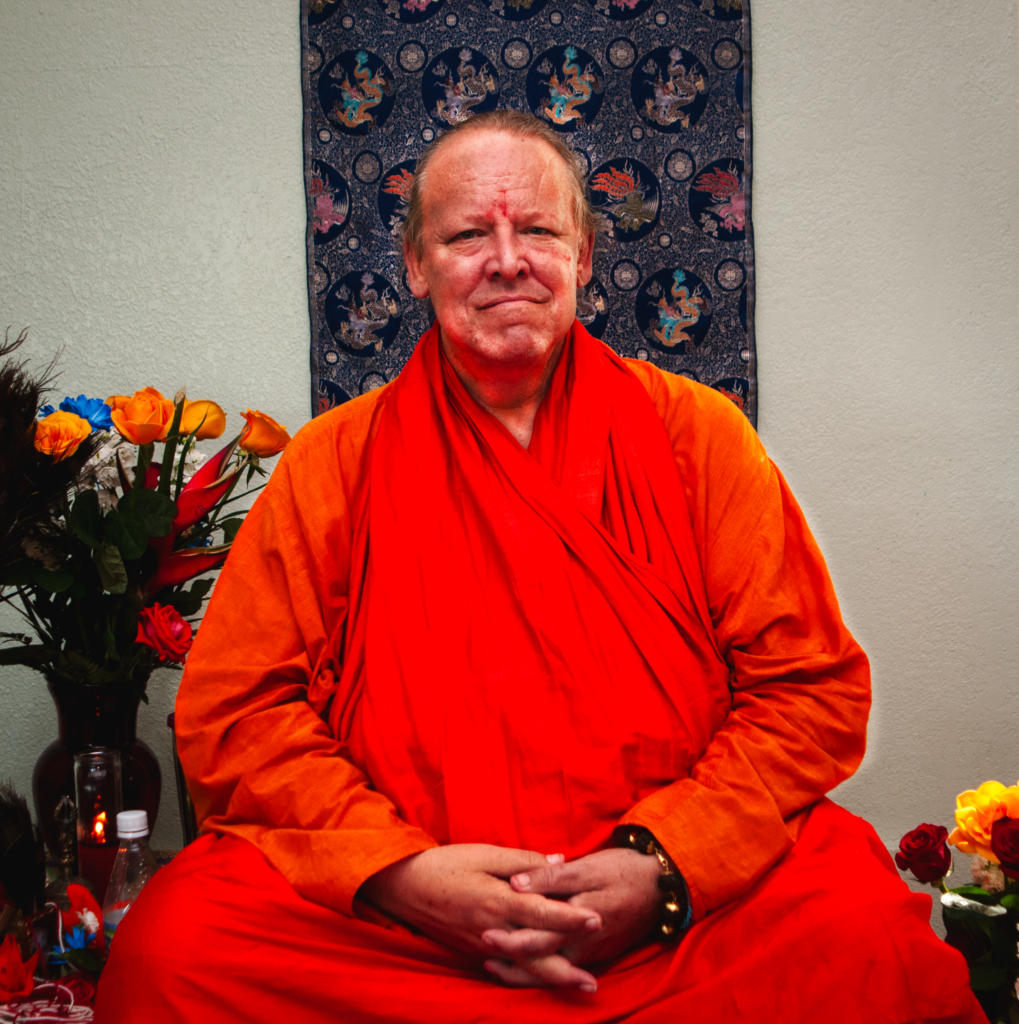
"The relationship between the Pranayama and the Dharana, when applied to the Pratyahara, gives rise spontaneously to the experience of Dhyana and the introduction into the doorway of Samadhi."
Meditation Master Mark Griffin
In Pratyahara IV – Guided Medittion, Mark Griffin presents a precise and methodical exploration of deep meditation through the yogic progression of pranayama, dharana, pratyahara, dhyana, and samadhi. Within his teaching framework, pratyahara is repositioned as a pivotal late-stage maneuver—the practical art of “stopping the mind” by withdrawing attention from the sensory field and stabilizing it within subtler dimensions of awareness.
The teaching emphasizes the mechanical intelligence of meditation practice. Rather than relying on conceptual effort or philosophical understanding, Griffin shows how breath functions as the primary engine of transformation. Through disciplined pranayama—especially retention practices such as kumbhaka and rechaka—the practitioner learns to widen the inner interval between prana and apana. This widening gap becomes a functional switch that gradually powers down the sensory apparatus, reducing externalization and allowing consciousness to settle inward with increasing ease.
A key operational insight centers on relocating the focus of breath from the full circuit of ida, pingala, and sushumna to the solar plexus, described as the origin point of the sensory fields. By concentrating pranic force in this region, the practitioner develops a reflexive capacity to disengage from sensory stimuli without resistance. As this reflex strengthens, the oscillating polarity of ida and pingala begins to resolve, and attention flows more steadily within the central channel of sushumna.
With the reduction of sensory load, meditation deepens naturally. Griffin describes this transition as the progressive emergence of samadhi, initially experienced as Laya Samadhi—characterized by stillness, slowing of mental activity, and subtle luminosity—before maturing into the distinction between Savikalpa and Nirvikalpa states. Throughout the teaching, pratyahara is framed as a learnable skill that integrates breath, attention, and energetic awareness into a unified interior movement, demonstrating that the stopping of the mind is not an abstract ideal but a reproducible yogic capacity cultivated through sustained practice.

Member Access
To listen to the full audio and access the teaching materials, please log in or become a member.