Prana and Apana
Making the Breath Conscious With the SoHam
In Prana and Apana, Mark Griffin explains how the ascending and descending currents of life-force shape meditation, revealing the central channel through breath, SoHam, and focused attention.
Duration: 1:11:03 / 19 Pages
You can become a member today to access this audio teaching from our growing archive, or purchase it from the Hard Light Center of Awakening bookstore.
IN THIS TEACHING
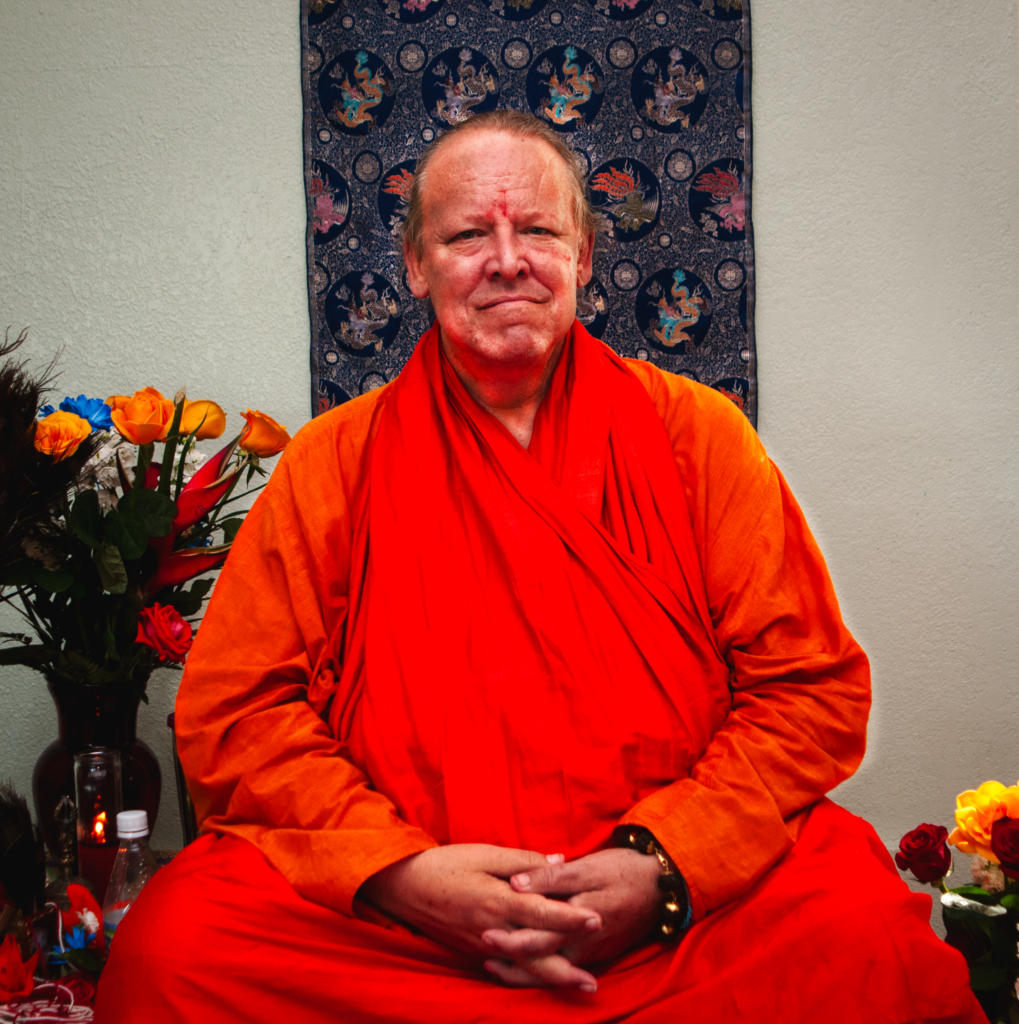
“Prana and apana are vital winds that sustain not only physical life but also our spiritual evolution…When balanced and guided with awareness, they form the foundation of the inward journey to realization.”
Meditation Master Mark Griffin
Prana and Apana is a detailed exploration of the two primary pillars of life-force that govern meditation practice: the descending current (apana) and the ascending current (prana).. Mark Griffin frames these forces as innate reflexes of consciousness—already present within the subtle body—and shows how deepening practice begins with the relaxation and opening of body, speech, and mind through breath. Using the bellows breath and the spontaneously arising mantra SoHam (ajapa-japa), he maps how attention can be trained to ride the breath’s natural descent and ascent, gathering the scattered energies of the psyche and drawing awareness into the central channel.
The teaching opens into a clear structural view of the yogic human form: four increasingly subtle sheaths (physical, subtle physical/energetic, mental, and supracausal), organized around the three principal nadis—ida (left/red/feminine), pingala (right/white/masculine), and sushumna (central/formless). Griffin emphasizes that awakening is not primarily “evolution” in the worldly sense, but involution: the deliberate withdrawal of attention from the phantasmagoria of sensory life into subtler layers of being. As attention internalizes, consciousness begins to illuminate the three channels—especially the sushumna—producing a tangible increase of energetic clarity along the central column between base of spine and crown of head, described as the essential “three-and-a-half foot” spiritual path.
Within this framework, SoHam becomes more than a mantra: it is a living demonstration of how the universal and the created continually interpenetrate. Griffin presents Ham as the vibration of the Ocean of Consciousness with its seat at the crown (the “deep lake” of subtle instruments above the brahmarandhra), and So as the vibration of creation rooted at the base of the spine (the “coiled serpent” of kundalini potential). The breath provides the bridge: the inward breath sinks like water, the outward breath rises like flame, and the practitioner learns to recognize how these currents—prana and apana—shape the movement of attention through ida, pingala, and into the equilibrium of sushumna. He also introduces key “seats” for directly sensing these currents: apana as a powerful gravitational draw at the sacral base, and prana as an uplifting force at the high heart.
A major practical turning point in the talk is the emphasis on the space between breaths—the interval where breath, prana, and mind naturally pause. Griffin describes this gap as a doorway: when movement stops, the mind can recognize the still, empty, yet fully conscious source of awareness. Training attention to perceive this cessation is presented as a direct method for shifting from externalized awareness (left/right channel activity) into the central channel where consciousness becomes intensely focused and luminous. In this sense, the “absence of event” becomes the most revealing event, because it discloses consciousness beyond motion, beyond thought.
Throughout, Griffin returns to the Siddha principle that awakening is not based on belief, but on direct application of attention. The breath is the practical engine: we take roughly 21,000 breaths per day, yet most are unconscious—so the practice is to flood each breath with awareness until even a single breath becomes a profound revelation. He links this to the classic yogic promise of accelerated transformation: consistent mindful breathing intensifies kundalini, purifies karmic residue, and gradually converts understanding into realization, and realization into recognition. The teaching closes by reaffirming SoHam and prana–apana as a complete, accessible technology—“a fruit in your hand”—for illumination, integration, and the inward turning that reveals the already-present truth of Self.

Member Access
To listen to the full audio and access the teaching materials, please log in or become a member.