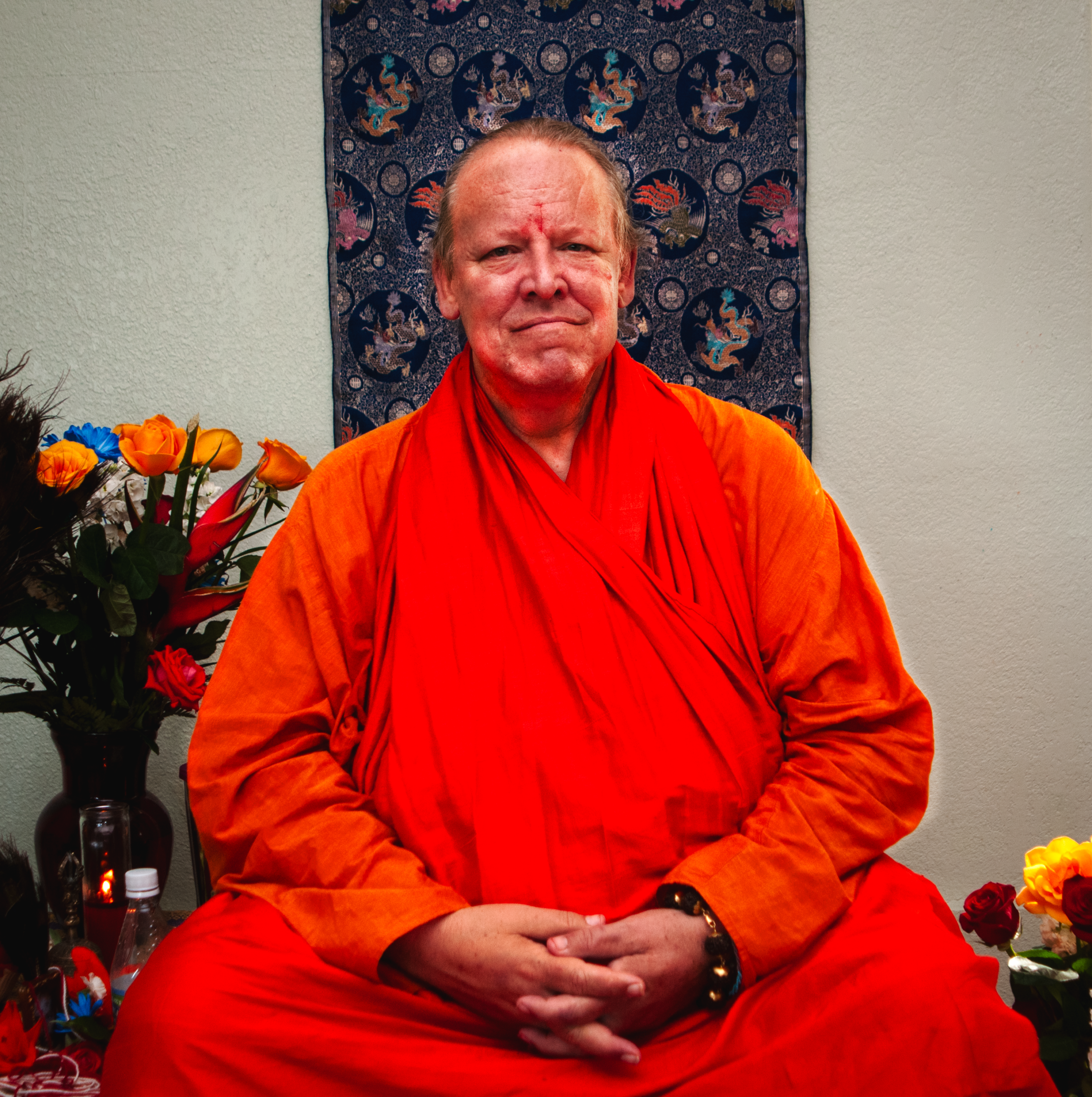
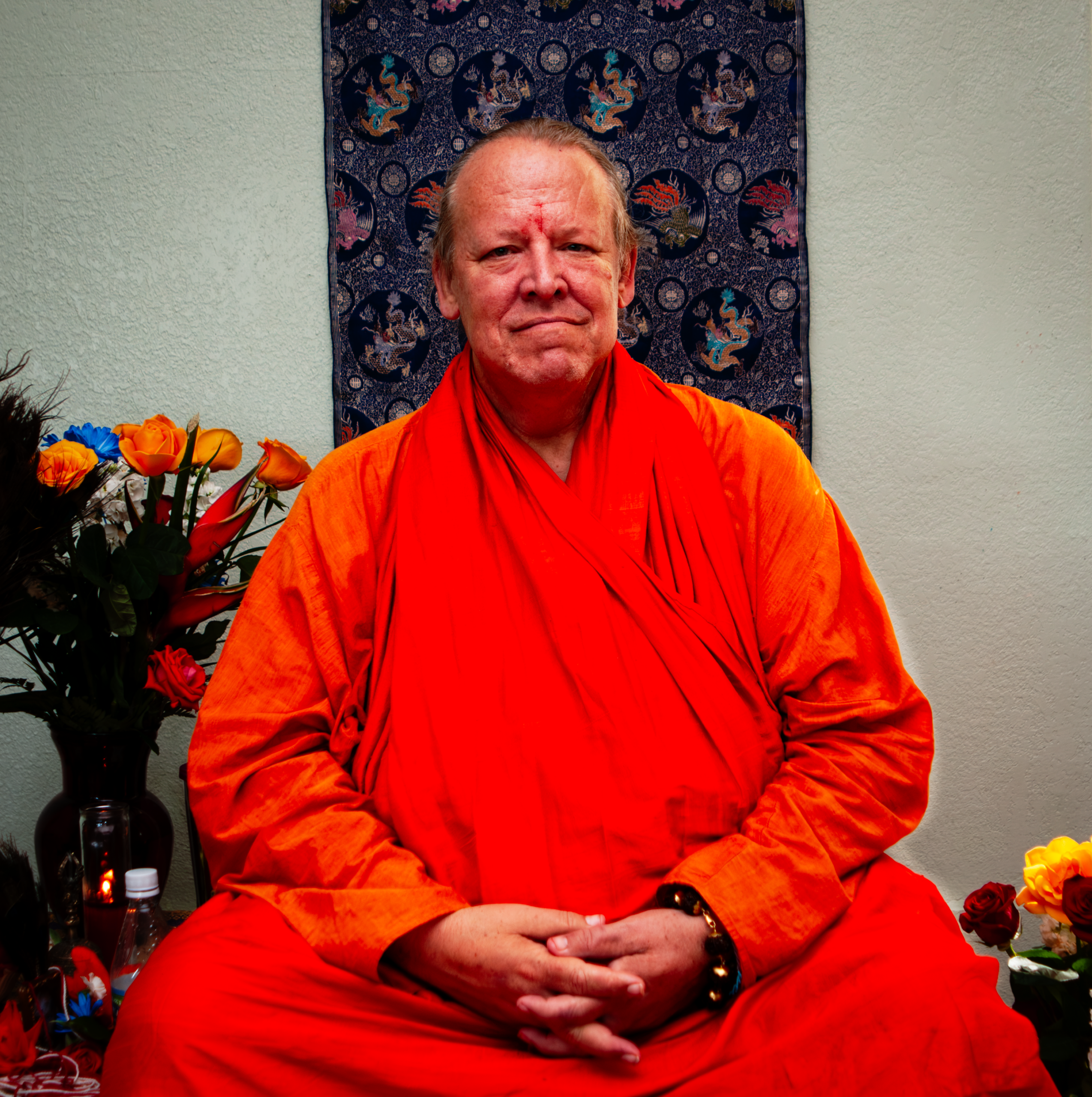
In this powerful one-hour discourse, Mark Griffin reveals the breath as one of the most potent and accessible tools for spiritual realization. Drawing from classical yogic and tantric systems, he shows how breath is not just a biological function—but a bridge between body, mind, and consciousness.
Mark explains that breath is prana in motion—a vehicle of vital energy and awareness. When we concentrate on the breath, especially with precision and stillness, we begin to activate deeper layers of perception. He speaks of the breath as a thread of continuousness, guiding us into the subtle bodies and toward the Self.
Importantly, he frames the breath as both a stabilizing force in meditation and a spiritual current capable of leading the practitioner into states of samadhi. Breath becomes a technology of stillness—not something to control, but something to listen to and follow with exquisite attention.
Throughout the talk, Mark encourages practitioners to let go of the noisy surface of the mind and instead enter the subtle current of the breath, which leads into the mystery of consciousness itself.
🌀 Questions for Contemplation
Contemplation is the means by which we can “feel” our way into the deep, existential questions of life. In this way it is a mode of “thinking” that differs from discursive fact gathering —the step-by-step means by which we assemble and organize information. While this form of knowledge gathering can be crucial to our mastery of a subject, contemplation activates the intuitive faculties of mind that lead towards insight, understanding, wisdom, and realization.
Begin to observe how this ability to feel deeply into a subject differs from the more rudimentary stages of learning. Let Mark’s words move you into a space where the mind has room to integrate your own fields of deeper knowing. Towards that end each module will offer an opportunity for focused contemplation. We recommend journaling as a means to engage with these questions and to activate one’s own intuitive faculties.
Contemplate
What is my relationship to the breath when I’m not meditating? Can I feel it as a living force, rather than just a physical process? Begin noticing your breath throughout the day—not to change it, but to feel into its presence.
How does my awareness change when I place full attention on the breath in stillness? Explore the shift that happens when thought quiets and the breath becomes primary.
Can I feel the breath as a thread of continuity linking body, mind, and awareness? Reflect on the subtle intelligence of the breath and its role as a bridge to deeper consciousness.
In what ways does the breath teach me, if I treat it as a guide rather than something to manipulate? What wisdom arises when I listen to the breath instead of trying to control it?
Lesson 4 Summary: Listening to the SoHam Meditation
In this meditation, Mark Griffin offers a detailed and experiential guide to the practice of listening to the SoHam — not just as a mantra or technique, but as a cosmic frequency that is always present in the breath.
He explains that:
SoHam (“I am That”) is the sound the breath makes — So on the inhale, Ham on the exhale — and is a sacred echo of the Self recognizing the Self.
Meditation deepens when one shifts from merely repeating SoHam to hearing it — listening into the breath and discovering a subtle current that runs underneath ordinary awareness.
This subtle current is described as a vibration of unity, a soundless sound, a movement toward stillness that opens the practitioner to deeper states of samadhi.
Mark underscores the difference between external effort and internal attunement. Listening, in this case, becomes a way of surrendering the mind to the deeper intelligence of the breath and the Self.
He also highlights the way SoHam bridges the personal and the universal — aligning us with the same breath that animates all beings.
The module encourages students to refine their subtle awareness, quiet the mental chatter, and enter into a receptive state where the breath reveals profound truths about the nature of consciousness.
🌀 4 Contemplation Questions for Journaling
Contemplation is the means by which we can “feel” our way into the deep, existential questions of life. In this way it is a mode of “thinking” that differs from discursive fact gathering —the step-by-step means by which we assemble and organize information. While this form of knowledge gathering can be crucial to our mastery of a subject, contemplation activates the intuitive faculties of mind that lead towards insight, understanding, wisdom, and realization.
Begin to observe how this ability to feel deeply into a subject differs from the more rudimentary stages of learning. Let Mark’s words move you into a space where the mind has room to integrate your own fields of deeper knowing. Towards that end each module will offer an opportunity for focused contemplation. We recommend journaling as a means to engage with these questions and to activate one’s own intuitive faculties.
Contemplate
What does it mean to listen — rather than repeat — the SoHam mantra? Where do you feel the difference between mental repetition and inner attunement?
How does the breath change when you stop trying to control it? Explore what happens when you surrender to the breath as a teacher rather than an object of technique.
Can you identify the subtle presence or vibration beneath the sound of the breath? How would you describe it? Does it carry a feeling of unity or recognition?
What shifts occur in your awareness when you allow yourself to be breathed by SoHam? Does this change your understanding of who or what you are?
In this profound teaching, Mark Griffin demystifies the sacred and often misunderstood subject of Shaktipat—the transmission of spiritual awakening energy from guru to student.
Shaktipat is not merely symbolic or conceptual. It is a direct activation of the kundalini, the latent spiritual energy within each person, stirred awake through the will of the teacher and the receptivity of the student. Mark presents this as a living reality, not a metaphor.
He emphasizes that:
Shaktipat awakens a deep, internal process of remembrance. The soul begins to turn inward, away from its habitual identification with the external world and toward its eternal Source.
This transmission is an act of Divine Will, arising not from the ego of the teacher but from the intelligence of the Self itself. It moves with grace, precision, and inevitability.
The experience of Shaktipat isn’t always grand or dramatic. For some, it’s subtle—a shift in awareness, a softening, a sense of coming home.
As the kundalini rises, so does the need for sadhana (spiritual practice). The fire has been lit, and the student must now tend it with discipline and devotion.
Mark repeatedly returns to the triadic unity of Guru, God, and Self—three aspects of the same luminous awareness. The guru is both external and internal, ultimately merging into the Self.
Shaktipat, then, is not just an event but a turning point in the soul’s long journey back to the One. It is the beginning of a process that is unfailing, and if nurtured with the help of the teacher, can lead to liberation in a single lifetime.
🌀 Contemplation Questions
Contemplation is the means by which we can “feel” our way into the deep, existential questions of life. In this way it is a mode of “thinking” that differs from discursive fact gathering —the step-by-step means by which we assemble and organize information. While this form of knowledge gathering can be crucial to our mastery of a subject, contemplation activates the intuitive faculties of mind that lead towards insight, understanding, wisdom, and realization.
Begin to observe how this ability to feel deeply into a subject differs from the more rudimentary stages of learning. Let Mark’s words move you into a space where the mind has room to integrate your own fields of deeper knowing. Towards that end each module will offer an opportunity for focused contemplation. We recommend journaling as a means to engage with these questions and to activate one’s own intuitive faculties.
Use these as daily or weekly points for deep reflection. Let them unfold within your awareness intuitively.
Contemplate
What part of me still seeks refuge in the external world, and how does this contribute to forgetfulness of my inner Source? Reflect on the dynamic of “phenomenal attachment” that Mark describes. In what subtle or overt ways do you find your attention pulled outward, and what “fog” arises as a result?
Have I experienced moments where the divine will seemed to override my personal will? How did it feel? Consider how the interplay between individual will and Divine Will shapes your life’s direction. Are there times when a deeper wisdom moved through you—without planning or resistance?
What does the union of Guru, God, and Self mean to me, beyond philosophy? Explore the internalized meaning of this triad. How does it shift your perception of the Guru principle—not as something external, but as the bridge to your essential Self?
What does “right action” mean in my life—and where am I resisting it? Consider Mark’s description of Kriya and skillful means. What happens when you know the right thing to do but hesitate to act? What would alignment look like in practice?
In this culminating module, Mark Griffin offers a deep, experiential transmission of the Bodhicitta—the awakened heart-mind of compassion and wisdom. He presents Bodhicitta not as an abstract virtue, but as a stabilizing force during the most intense inner transformations, particularly when one is navigating the “tempestuous waters” of purification.
Bodhicitta is accessed through the seat of the heart, a subtle space described as a “celestial akasha” located behind the sternum. There, the red energy of Kundalini rising from the base and the white Bodhicitta drop descending from the crown meet in equilibrium. This meeting point becomes a wellspring of courage, clarity, and love. It awakens the presence of the angels of generosity, patience, kindness, and aligns the practitioner with skillful means and stability.
Mark offers practical techniques to activate Bodhicitta, including deep bellows breathing, focus on the shushumna, and careful attunement to the SoHam mantra. Through this meditation, the yogi begins to feel the generation and balance of the four bodies and the cardinal channels of prana. The Bodhicitta becomes a functional, radiant center—a point where individual and universal will converge.
🌀 Questions for Contemplation & Journaling
Contemplation is the means by which we can “feel” our way into the deep, existential questions of life. In this way it is a mode of “thinking” that differs from discursive fact gathering —the step-by-step means by which we assemble and organize information. While this form of knowledge gathering can be crucial to our mastery of a subject, contemplation activates the intuitive faculties of mind that lead towards insight, understanding, wisdom, and realization.
Begin to observe how this ability to feel deeply into a subject differs from the more rudimentary stages of learning. Let Mark’s words move you into a space where the mind has room to integrate your own fields of deeper knowing. Towards that end each module will offer an opportunity for focused contemplation. We recommend journaling as a means to engage with these questions and to activate one’s own intuitive faculties.
Use these as daily or weekly points for deep reflection. Let them unfold within your awareness intuitively.
Contemplate
How do I experience the ‘seat of the heart’ in my body and awareness? Mark invites us to feel into the deep heart, behind the sternum. What arises when you rest your attention there—not just physically, but emotionally and energetically?
What situations in my life call for the courage and clarity of Bodhicitta? The Bodhicitta is described as a “fail safe” in difficult inner and outer circumstances. Where do you feel most challenged or unclear? How might the awakened heart respond?
How do the rising and descending forces within me interact? Do I feel a need for greater balance? Explore your internal energetics: Kundalini rising from the root, and pure consciousness descending from the crown. Where are you imbalanced, and how can you meet in the heart?
What does it mean to let the universal will move through my heart and guide my actions? This meditation helps us witness the convergence of individual and universal will. Reflect on moments when you surrendered deeply and right action emerged effortlessly.
Lesson 3 Summary: Prana, SoHam, and the Four Bodies
This module is a technical talk that dives into the yogic use of breath (prana), the mantra SoHam, and their relationship to the four bodies (physical, subtle, causal, and supra-causal). Mark Griffin opens the talk by establishing the breath not just as a tool for meditation, but as a primary vehicle of consciousness itself. He describes SoHam as the natural mantra of the breath, a current of vibration and identity that arises from the Self and returns to it.
He describes the movement of prana as a multidimensional force, navigating through channels (nadis), spheres (chakras), and bodies that span the gross to the transcendental. The practice of breath awareness is given shape through specific techniques like Ajapa Japa (repetition without repetition), bellows breath, and single-pointed concentration.
Crucially, Mark links breath and mantra to the inner journey of movingidentification from the personality to an alignment with the inner witness—the still point from which all consciousness arises. He explains that working with prana and SoHam opens the gates to Shaktipat, and initiates transformation not just in the mind, but in the energetic architecture of the being itself.
In “Prana, So Ham, and the Four Bodies,” Mark Griffin continually returned to the topic of the four bodies and their four states of awareness as fundamental aspects of the human architecture and our experience of it. In another of his seminal texts, 108 Discourses on Awakening, Mark explains:
“The human form has four bodies of increasing subtlety: the physical body, which is the organizational point of matter; the subtle physical body, which is the organizational point of energy; the causal body, which is the organizational point of the mind; and the supra-causal body, which is the organizational point of infinite consciousness. All four bodies are inside the frame of the physical body, subtle sheath within sheath within sheath.”
He goes on to iterate:
“The first three states of consciousness–waking, sleep with dreams, and dreamless sleep are relative to the four bodies. The waking state relates primarily to the physical body wherein the operations of the senses, the mind, and the prana are present.
However, as we enter the sleep-with-dreams state, the awareness of the body and the senses falls away. All we have left is the awareness of the mind and the prana. In this state, we operate inside a condition of pure thought that is culled from the memory of the mind.
Then as we shift into deep sleep, the physical body and the senses shut down and only the life force, the prana, is present. The mind is gone. The senses are gone. The body is gone. Spiritually speaking, this state of consciousness is one membrane away from Atman.”
That leaves the Fourth State. Mark says:
“The sages tell us, “The mind, the body, and the senses make up the dynamics of the psychic apparatus. If the mind is gone, the senses are gone, and the body is gone, another center of consciousness must exist.” And thus it is. The Atman–the fourth state.”
Below, you’ll find two tables by which to view the organization of the four bodies and their attending four states of awareness…
Prana, SoHam, and the Four Bodies
Body:
Includes:
Also Known As:
Physical Body
Flesh, blood, nerves, muscles, bone, etc. Prana as physical life force (Libido).
The self, who & what we think we are.
Subtle-Physical Body
Chakras, Nadis (72,000 in number), The Three Major Channels: Sushumna (central channel), Ida (left channel, lunar), Pingala (right channel, solar), Bindus, Drops, Seats of the Five Pranas (Prana, Apana, Samana, Vyana, Udana), 5 Elements, Prana as electric life force
Subtle body, Pranic body, Astral body
Causal Body
Mind (manas), Ego (ahamkara), Intellect (buddhi), list-making capacity, memory… Prana as mental life-force
The Mind, Mental Body
Supra-Causal Body
The Blue Pearl, The Rupa, Prana as Infinite Consciousness
The Self, Atman, God
Prana, SoHam, and the Four Bodies
States of Awareness:
The Experience of…
Also Known As…
Waking
Conventional Reality, the Appearance, the shared dream
the world, the universe
Sleep-with-Dreams
the individual dream
dreaming
Dreamless Sleep
the mind thinking of “no thing”
deep sleep, delta/theta states
Fourth State
Infinite Pure Consciousness, Reality
Turiya
🌀 Questions for Contemplation
Contemplation is the means by which we can “feel” our way into the deep, existential questions of life. In this way it is a mode of “thinking” that differs from discursive fact gathering —the step-by-step means by which we assemble and organize information. While this form of knowledge gathering can be crucial to our mastery of a subject, contemplation activates the intuitive faculties of mind that lead towards insight, understanding, wisdom, and realization.
Begin to observe how this ability to feel deeply into a subject differs from the more rudimentary stages of learning. Let Mark’s words move you into a space where the mind has room to integrate your own fields of deeper knowing. Towards that end each module will offer an opportunity for focused contemplation. We recommend journaling as a means to engage with these questions and to activate one’s own intuitive faculties.
Contemplate
What does it mean to me that the breath is not just a bodily function, but a carrier of consciousness and spiritual identity? Reflect on the possibility that every inhale and exhale is a message from the Self.
Can I observe the movement of prana—not just in the lungs, but in the subtle body? Explore the inner texture of breath. Where do you feel it? What does it reveal?
What is the mantra SoHam revealing to me when I follow it with awareness? Investigate how this mantra resonates within your meditation. Does it shape your sense of self?
Where am I still identified with the outer world of thought and emotion, and how might breath and mantra bring me closer to the witness within? Begin to feel into that shift—from personality to Presence.
In this foundational talk, Mark Griffin emphasizes that sadhana—spiritual practice—is the means by which the aspirant moves from discursive knowledge gathering toward wisdom itself, from potential to realization. He frames sadhana as the disciplined effort to know the Self, not through intellectual understanding, but through direct experience.
Mark explains that while the world encourages us to identify with the body, mind, and personality, the spiritual path urges us to identify with the our deepest core of true identity— the vast, eternal Self. He underscores the importance of daily meditation, concentration, and devotion as methods for awakening this deeper awareness.
Sadhana is not merely a lifestyle—it is a purifying force that clears away obstructions, awakens dormant faculties, and prepares the vessel for the grace of Realization. He also speaks to the mystery of why someone feels called to the path at all, describing that pull as the echo of the Self remembering itself.
🌀 Questions for Contemplation
Contemplation is the means by which we can “feel” our way into the deep, existential questions of life. In this way it is a mode of “thinking” that differs from discursive fact gathering —the step-by-step means by which we assemble and organize information. While this form of knowledge gathering can be crucial to our mastery of a subject, contemplation activates the intuitive faculties of mind that lead towards insight, wisdom, and realization.
Begin to observe how this ability to feel deeply into a subject differs from the more rudimentary stages of learning. Let Mark’s words move you into a space where the mind has room to integrate your own fields of deeper knowing. Towards that end each module will offer an opportunity for focused contemplation. We recommend journaling as a means to engage with these questions and to activate one’s own intuitive faculties.
Contemplate
What first drew me to the spiritual path—and what continues to call me now? Explore the subtle longing behind your journey. What truth or freedom are you really seeking?
In what ways do I still identify with the body, the mind, or the personality—and how do these identifications shape my experience of reality? Begin to notice the layers of identity that veil your deeper Self.
What does daily spiritual practice clear away in me? What does it reveal? Reflect on how consistent effort affects your inner landscape, and what this new found awareness brings to the table.
Can I feel the difference between knowledge I’ve gathered, and wisdom I’ve realized? Where in your life has insight arisen—not from thinking, but from direct experience, and how does this differ from what I’ve learned through fact gathering?
Lesson5 Summary: The Space Between the Breaths Meditation
In this meditative teaching, Mark Griffin invites practitioners into the subtle and sacred space between the in-breath and out-breath. Referred to in yogic and tantric traditions as the “juction,” this twilight-like space is not merely a pause but the opening of a doorway to awakened awareness.
The meditation begins with the bellows breath (a breath initiated and controlled by the solar plexus), guiding practitioners to enter this liminal space where the mind becomes still and the subtle vibration of the So-Ham mantra arises.
“So” represents the vibration of creation — the manifest universe.
“Ham” is the vibration of the infinite — the ocean of pure consciousness.
These vibrations flow through the central nerve, and the space between them becomes the locus of meditation. Mark speaks of this space as a secret, luminous point in the innermost consciousness where duality collapses into unity. It is here that Bodhicitta — the seed of enlightenment — is revealed and amplified.
The space between breaths becomes more than technique. It is a vehicle of realization, a training ground for stabilizing attention, and ultimately, a portal for stepping “between the worlds” into one’s awakened form.
🌀 Questions for Contemplation
Contemplation is the means by which we can “feel” our way into the deep, existential questions of life. In this way it is a mode of “thinking” that differs from discursive fact gathering —the step-by-step means by which we assemble and organize information. While this form of knowledge gathering can be crucial to our mastery of a subject, contemplation activates the intuitive faculties of mind that lead towards insight, understanding, wisdom, and realization.
Begin to observe how this ability to feel deeply into a subject differs from the more rudimentary stages of learning. Let Mark’s words move you into a space where the mind has room to integrate your own fields of deeper knowing. Towards that end each module will offer an opportunity for focused contemplation. We recommend journaling as a means to engage with these questions and to activate one’s own intuitive faculties.
Use these as daily or weekly points for deep reflection. Let them unfold within your awareness intuitively.
Contemplate
What is the “space between the breaths” for you — experientially, not conceptually? Can you describe it without using the mind? (Hint: Let this question guide you into feeling the gap itself.)
When Mark describes the vibrations of “So” and “Ham” as the representation of creation and consciousness, what does that duality mean to you? Where do you see it in your life?
Can you train your attention to rest not on the breath itself, but on the stillness between breaths — even while walking, working, or moving through the world? What changes when you do?
Mark says that Bodhicitta — the enlightened nature of the human form — arises as attention moves into this spacious gap between the breaths. What does this tell you about your own enlightened nature and its relationship to the awakening of awareness?