

Lesson 6 Summary: What Is Shaktipat?
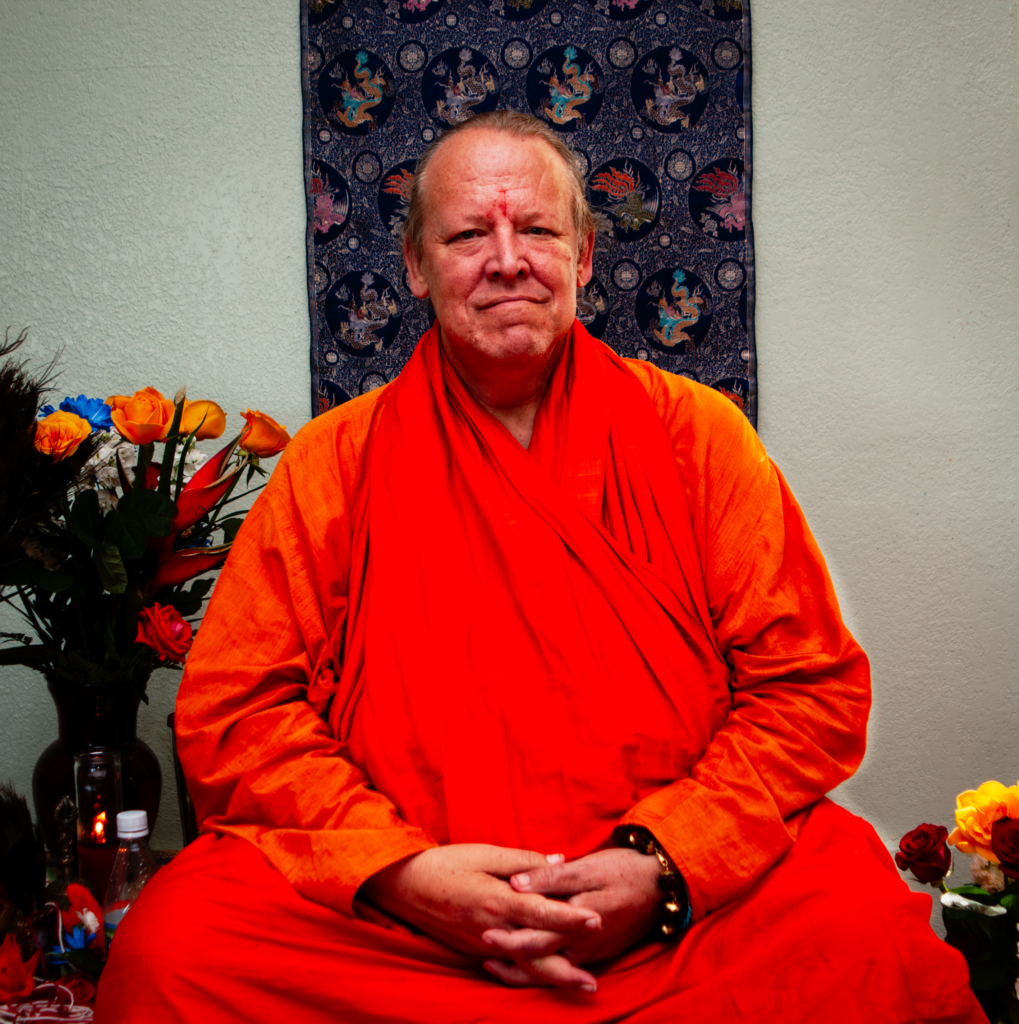
What is Shaktipat? In this teaching, Mark Griffin explores the sacred transmission of spiritual awakening from Guru to disciple.
Shaktipat is not presented merely as a symbol, concept, or religious ceremony. It is a direct activation of Kundalini—the latent spiritual energy within the human form—awakened through the power of the Guru and the receptivity of the student. Mark describes this transmission as a living reality rather than a metaphor.
Shaktipat initiates a deep process of inner remembrance. Attention begins to turn away from habitual identification with the external world and toward its inner source. What has always been present but obscured by thought, attachment, and conditioning gradually begins to reveal itself.
Mark explains that this transmission arises through Divine Will rather than the personal ego of the teacher. Guru Shakti moves with its own intelligence, grace, and precision, activating the spiritual process according to the needs and capacity of the disciple.
The experience of Shaktipat is not always dramatic. It may appear as a powerful movement of energy, but it can also manifest as a subtle shift in awareness, an unexpected opening of the heart, a deepening attraction to meditation, or a quiet sense of returning home. The outward experience varies, while the underlying movement remains directed toward awakening.
As Kundalini becomes active, the need for sadhana—sustained spiritual practice—also deepens. The initial transmission begins a process that must be supported through meditation, discipline, devotion, discernment, and right action. The fire has been lit; the practitioner must learn how to tend it.
Throughout the teaching, Mark returns to the unity of Guru, God, and Self. These are not ultimately separate realities, but different expressions of the same luminous consciousness. The Guru may first appear as an external teacher, yet the purpose of the relationship is to awaken recognition of the Guru-principle within.
Shaktipat is therefore more than a single spiritual event. It is a turning point in the movement from separation toward recognition. Mark presents it as the beginning of an unfailing process which, when nurtured through practice and the guidance of the teacher, can lead the disciple toward liberation.
🌀 Contemplation Questions
Contemplation allows us to feel our way into the deeper questions of spiritual life. It differs from discursive thinking—the step-by-step process through which we gather and organize information. While intellectual understanding has an important role, contemplation activates the intuitive faculties that lead toward insight, understanding, wisdom, and realization.
Allow these questions to unfold gradually within awareness. You may work with them daily or weekly, recording insights, resistances, and changes in understanding through journaling.
Contemplate
- What part of me still seeks refuge in the external world, and how does this contribute to forgetfulness of my inner Source?
Reflect on what Mark describes as phenomenal attachment. In what subtle or obvious ways is your attention continually pulled outward? What confusion or “fog” arises as a result? - Have I experienced moments when Divine Will seemed to override or redirect my personal will?
Consider how individual will and Divine Will have interacted in your life. Have there been moments when a deeper intelligence appeared to move through circumstances without your planning or control? - What does the unity of Guru, God, and Self mean to me beyond philosophical understanding?
Explore the inner meaning of this triad. How does it change your understanding of the Guru—not merely as someone external, but as a bridge to recognition of the Self? - What does “right action” mean in my life—and where am I resisting it?
Consider Mark’s description of skillful means. What happens when you know the right thing to do but hesitate to act? What would alignment look like in practice?