

Lesson 7 Summary: Bodhicitta Meditation
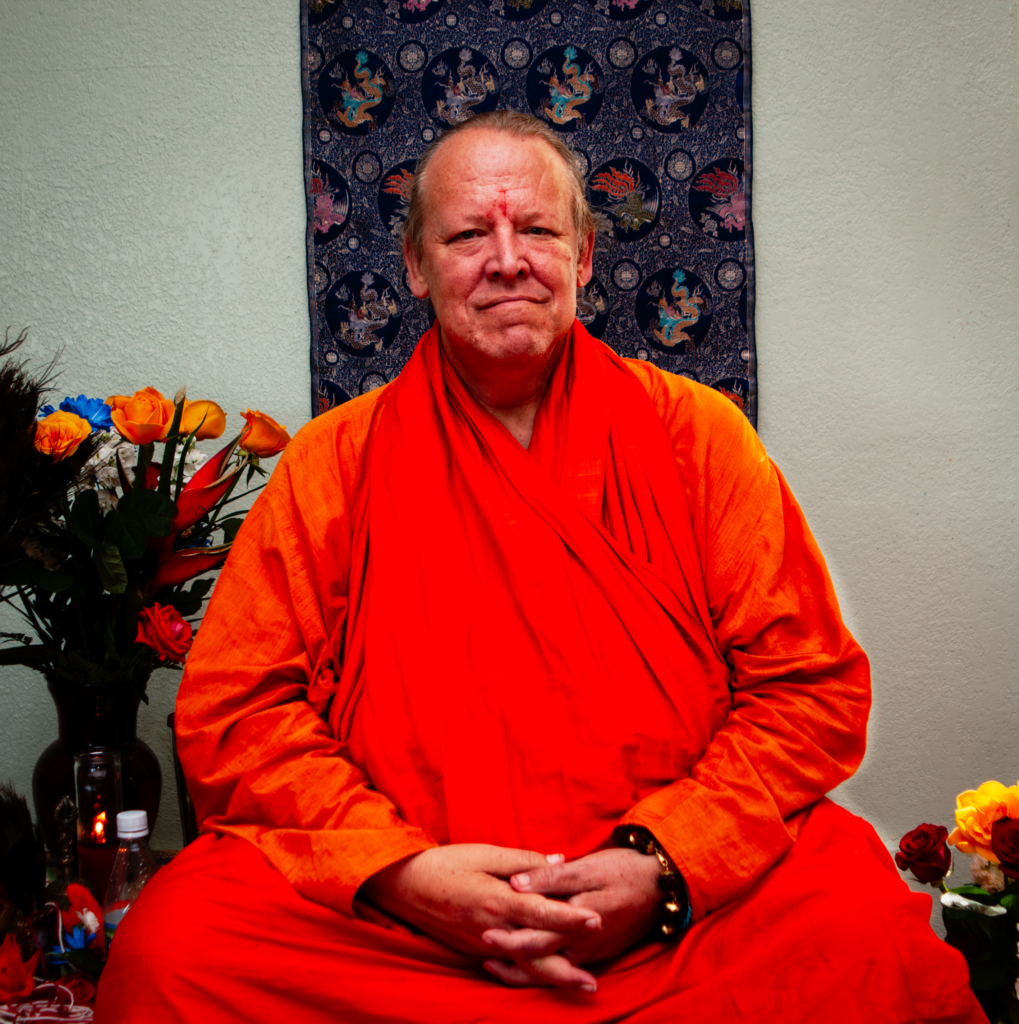
In this culminating Bodhicitta meditation, Mark Griffin presents bodhicitta as the awakened heart-mind of compassion and wisdom. Rather than treating it as an abstract virtue, he describes bodhicitta as a stabilizing force during periods of intense inner transformation—particularly when the practitioner is navigating what he calls the “tempestuous waters” of purification.
Mark directs attention toward the seat of the heart, a subtle space behind the sternum that he describes as a “celestial akasha.” Within this inner space, the rising red energy of Kundalini and the descending white bodhicitta drop meet and come into equilibrium. Their convergence in the heart becomes a source of courage, clarity, compassion, and love.
Through this balance, the practitioner becomes increasingly aligned with the qualities of generosity, patience, and kindness. Bodhicitta becomes more than a spiritual ideal; it functions as an active center of awareness from which skillful means and right action can arise.
Mark offers practical methods for awakening this center, including bellows breathing, concentration on the sushumna, and careful attunement to the SoHam mantra. Through the Bodhicitta meditation, the practitioner begins to experience the relationship among breath, prana, the subtle channels, and the four bodies.
The practice brings attention to two complementary movements: Kundalini rising through the human system and pure consciousness descending from above. As these currents come into balance within the heart, individual will begins to align with universal will. The heart becomes a radiant point of integration where spiritual energy, awareness, compassion, and action meet.
Bodhicitta therefore serves as both a contemplative realization and a practical inner resource. During difficult periods of transformation, it provides a stable center from which the practitioner can respond with courage rather than fear, clarity rather than confusion, and compassion rather than reaction.
🌀 Questions for Contemplation & Journaling
Contemplation allows us to feel our way into the deeper questions of spiritual life. It differs from discursive thinking—the step-by-step process through which we gather and organize information. While intellectual understanding has an important role, contemplation activates the intuitive faculties that lead toward insight, understanding, wisdom, and realization.
Allow these questions to unfold gradually within awareness. You may work with them daily or weekly, recording physical sensations, emotional responses, intuitive insights, and changes in understanding through journaling.
Contemplate
- How do I experience the seat of the heart within my body and awareness? Mark invites us to direct attention toward the deep heart behind the sternum. What arises when you rest your attention there—not only physically, but also emotionally and energetically?
- What circumstances in my life call for the courage and clarity of bodhicitta? Mark describes bodhicitta as a fail-safe during difficult inner and outer conditions. Where do you feel most challenged or uncertain? How might the awakened heart respond?
- How do the rising and descending forces within me interact? Explore the relationship between Kundalini rising from the base and pure consciousness descending from the crown. Do you experience a need for greater balance? How might these movements find equilibrium within the heart?
- What does it mean to allow universal will to move through my heart and guide my actions? Reflect on moments when personal resistance softened and right action emerged naturally. How might alignment with the awakened heart change the way you respond to the circumstances of your life?