
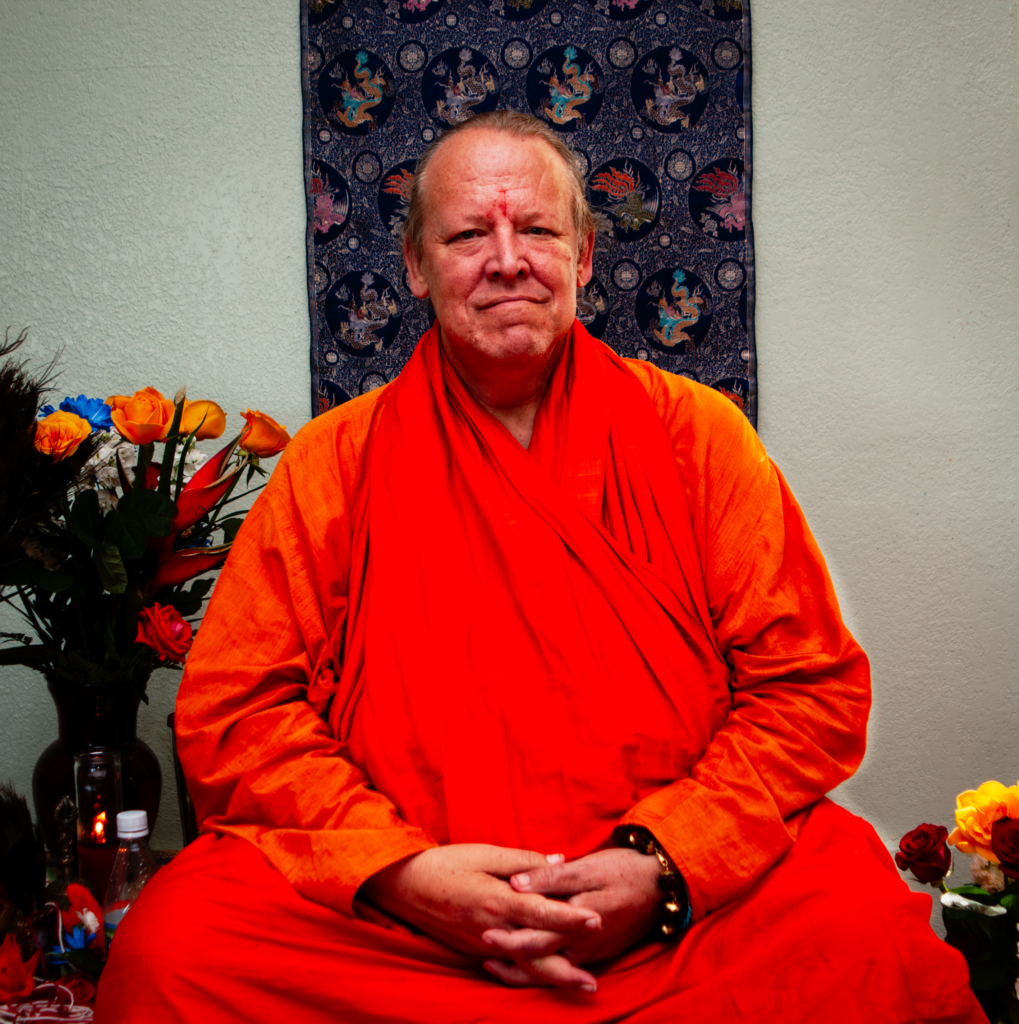


Lesson 4 Summary: Listening to the SoHam Meditation
In this experiential SoHam meditation, Mark Griffin offers detailed guidance in listening to the natural mantra of the breath. SoHam is presented not merely as a mantra to repeat or a technique to perform, but as a subtle frequency that is always present beneath ordinary awareness.
SoHam means “I am That.” Mark describes So as the sound of inhalation and Ham as the sound of exhalation. Together, they express the Self recognizing the Self through the continuous movement of breath.
Meditation deepens when the practitioner shifts from mentally repeating SoHam to listening for it. Attention moves inward, following the breath until a subtler current begins to reveal itself beneath thought and sensory activity. This current is experienced as a vibration of unity—a soundless sound leading awareness toward stillness and deeper states of samadhi.
Mark emphasizes the difference between external effort and internal attunement. Listening becomes a form of surrender in which the thinking mind yields to the deeper intelligence of the breath. Rather than imposing the mantra upon experience, the practitioner becomes receptive to a mantra that is already occurring naturally.
The SoHam mantra also bridges the personal and the universal. What initially appears to be an individual breath gradually reveals its connection to the life force animating all beings. Through careful listening, the distinction between the one who breathes, the act of breathing, and the awareness witnessing the breath begins to soften.
This lesson encourages students to refine subtle perception, quiet mental activity, and enter a receptive state in which the breath reveals deeper truths about consciousness and the nature of the Self.
🌀 4 Contemplation Questions for Journaling
Contemplation allows us to feel our way into the deeper questions of spiritual life. It differs from discursive thinking—the step-by-step process through which we gather and organize information. While intellectual understanding has an important role, contemplation activates the intuitive faculties that lead toward insight, understanding, wisdom, and realization.
Allow Mark’s words to create space for your own deeper knowing. You may wish to journal as you consider these questions, recording changes in the breath, attention, and your experience of the SoHam meditation.
Contemplate
- What does it mean to listen — rather than repeat — the SoHam mantra? Notice the difference between mental repetition and inner attunement. Where and how do you experience that difference?
- How does the breath change when you stop trying to control it?
Explore what happens when you surrender to the breath as a teacher rather than approach it as an object of technique. - Can you recognize a subtle presence or vibration beneath the audible sound of the breath?
How would you describe it? Does it carry a feeling of unity or recognition? - What shifts occur in your awareness when you allow yourself to be breathed by SoHam?
Consider whether this changes your understanding of who—or what—you are.